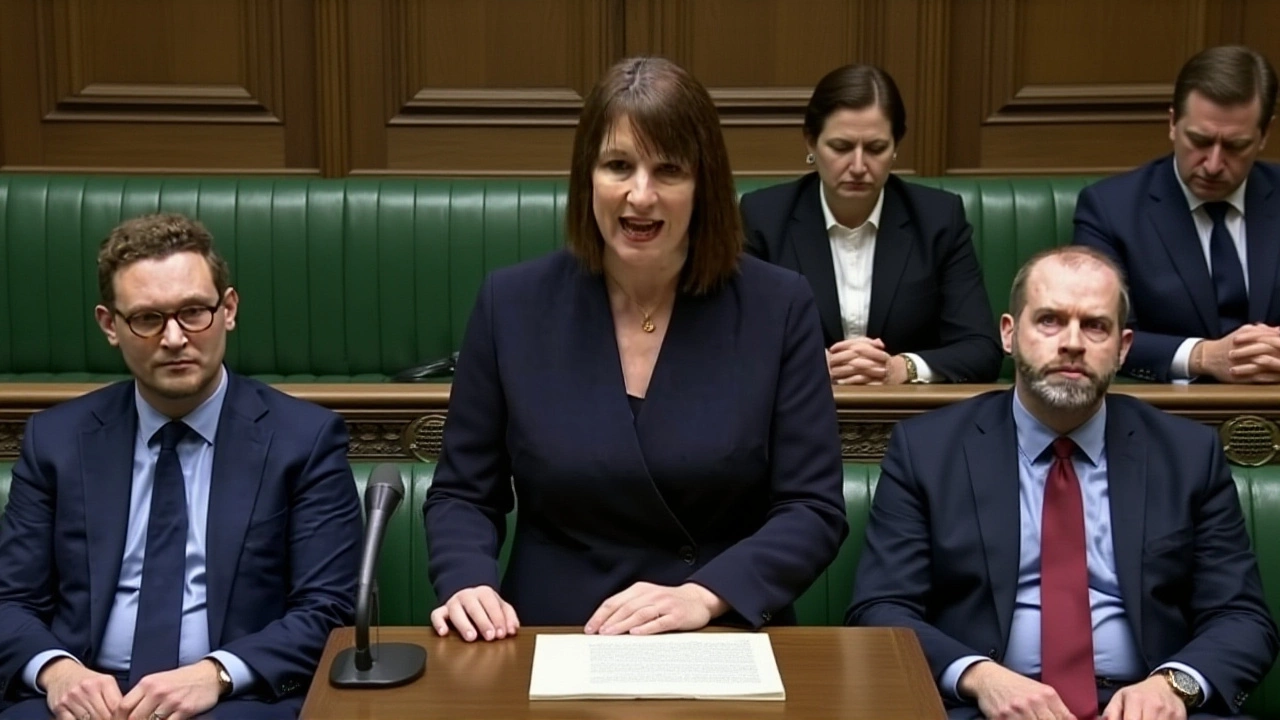
When Rachel Reeves stood before the Confederation of British Industry at the Queen Elizabeth II Centre in Westminster on November 27, 2025, she didn’t mince words: the UK is in a growth emergency. It wasn’t just a political soundbite — it was a diagnosis. And the treatment, she warned, would be painful. With the Autumn Budget 2025London just two days away, Reeves laid bare the grim reality inherited from the previous government: stagnant productivity, soaring debt, and a public that’s lost faith.
The Numbers Don’t Lie — But They Don’t Tell the Whole Story
The Office for Budget Responsibility (OBR), the UK’s independent fiscal watchdog, delivered its latest forecast just hours before Reeves’ speech. Growth for the UK economy? Now pegged at a meager 1.5% annually from 2027 onward — down from 1.8% just eight months ago. The fiscal deficit? A staggering 5% of GDP in 2025/26. Debt? Peaking just below 100% of GDP in 2023/24. And by 2029/30, household tax revenues will hit a record 38% of GDP — the highest in modern history. "We’re not here to make excuses," Reeves said. "We’re here to fix them." But fix them how? The OBR’s alternative scenario — faster AI adoption — feels like a hopeful footnote. Meanwhile, J.P. Morgan economist Allan Monks bluntly predicted a "deeper and longer recession," with cumulative GDP drag of 1.3% by 2025. The numbers are cold. The pain? Very real.‘Death by a Thousand Taxes’ — Business Fights Back
At the same CBI event, Rain Newton-Smith, Director General of the Confederation of British Industry, didn’t hold back: "If you really believe in economic growth, prove it." Her words echoed through the room. Businesses are drowning in compliance, regulation, and now — new levies. The budget’s headline measures — £900 million in permanent business rate cuts for 750,000 small retail, hospitality, and leisure properties — sound generous. But they’re offset by a new "pay-per-mile" tax on electric vehicles, a move that’s already drawing fury from EV owners and green advocates alike. The fuel duty freeze, extended until August 2026, is a political lifeline — inherited from Rishi Sunak — but it’s a Band-Aid on a broken leg. Meanwhile, the £6 billion fiscal shortfall in 2029/30 is being covered by tax hikes, not spending cuts. "We’re being taxed to death," one London café owner told me, wiping down her counter. "And no one’s asking if we can still afford to stay open."
The People Aren’t Buying It — Not Even Close
Here’s the twist: the public doesn’t trust the cure. A More in Common poll from November 2025, surveying over 2,000 voters, showed Rachel Reeves with an approval rating of -52. Sir Keir Starmer? -51. Sixty-eight percent said they wished Rishi Sunak was still Prime Minister. Sixty-seven percent wanted spending cuts — not tax increases. It’s not just about policy. It’s about perception. Reeves, in her November 26 Labour Party speech, avoided the word "growth" entirely. Instead, she promised to "cut the cost of living, cut NHS waiting lists, cut the cost of debt." That’s the language of survival — not ambition. And voters are listening. They remember inflation hitting double digits. They remember interest rates soaring. But they’re not convinced Labour’s fixes will heal faster than the wounds.The Big Bets: Nuclear, Rail, and the Green Transition
Still, the government isn’t just cutting — it’s investing. A staggering £14.2 billion is locked into the Sizewell C nuclear plant in Suffolk, under a regulated asset base model that will generate £700 million in receipts by 2026–27, doubling by 2030–31. Nuclear power, once politically radioactive, is now part of the UK’s green financing framework. The 30-year rail fare freeze? A political masterstroke — especially for commuters. The £150 energy bill cut? A lifeline for families. Scrapping the two-child benefit cap? A moral win for social policy. And free apprenticeships for small businesses? A long-term play on productivity. Regional investments are equally telling: £14.5 million for a low-carbon industrial hub in Grangemouth, Scotland, and support for critical minerals and marine tech in Cornwall. This isn’t just economic policy — it’s territorial politics. Labour is betting that if it can rebuild the North and the West, it can rebuild trust.
What Comes Next? The Tightrope Walk
The £72 billion fiscal tightening plan — equivalent to 2.5% of GDP — isn’t just about balancing books. It’s about survival. The government is walking a razor’s edge: deliver growth without triggering a deeper recession, raise taxes without sparking public revolt, and invest in the future while soothing the present. The OBR says tax-rich growth — driven by higher wages — could still pull the UK out of this. But that requires jobs, skills, and confidence. Right now, none of those are growing fast enough. Reeves knows this. She didn’t say "growth" in her Labour speech — but she didn’t need to. The silence spoke louder. The public isn’t waiting for slogans. They’re waiting for results.Frequently Asked Questions
Why is the UK’s growth forecast so low, and what’s driving it?
The Office for Budget Responsibility revised down its UK growth forecast to 1.5% annually from 2027 due to persistent productivity stagnation, weak business investment, and the lingering effects of Brexit-era trade friction. While AI adoption offers a potential upside, current data shows UK firms are adopting automation slower than Germany or the U.S. Wage growth is also not translating into productivity gains, a key driver of long-term economic expansion.
How will the new pay-per-mile tax on electric vehicles affect drivers?
The new "pay-per-mile" tax on EVs is designed to offset lost fuel duty revenue as more drivers switch from petrol and diesel. While exact rates haven’t been published, early estimates suggest a typical EV driver could pay an extra £50–£120 annually, depending on mileage. Critics argue it penalizes eco-conscious drivers, while the Treasury says it ensures fairer road funding — since EVs still use infrastructure but pay no fuel tax. The policy is being rolled out gradually, starting in 2026.
Why is the government investing in Sizewell C despite public opposition to nuclear power?
The Sizewell C nuclear plant is seen as essential for energy security and decarbonization. With coal plants shuttered and wind output inconsistent, the government views nuclear as a stable, low-carbon baseload power source. The £14.2 billion investment is backed by a regulated asset base model, which reduces financial risk for investors by guaranteeing returns — a key reason private capital is flowing in. By 2030, it’s expected to power 6 million homes and generate £1.4 billion annually in receipts.
What’s behind the public’s negative approval ratings for Rachel Reeves and Keir Starmer?
Despite Labour’s landslide win in July 2024, voters feel the cost-of-living crisis hasn’t improved — and may be worsening. The More in Common poll revealed deep skepticism over tax increases, especially with no visible reduction in inflation or NHS wait times. Many blame Labour for continuing austerity-style policies, while others simply miss the perceived competence of the former Conservative government. The -52 approval rating for Reeves is the lowest for any Chancellor since the 2008 financial crisis.
Is the UK’s fiscal tightening plan sustainable?
The £72 billion fiscal tightening — targeting spending cuts and tax hikes — is designed to bring the deficit below 2% of GDP by the early 2030s. While the Office for Budget Responsibility considers this path viable, economists warn that if growth remains below 1.5%, tax revenues will fall short, forcing deeper cuts or new taxes. The plan’s success hinges on productivity gains from apprenticeships, AI, and infrastructure — none of which deliver results overnight.
What role does the fuel duty freeze play in the budget’s political strategy?
Extending Rishi Sunak’s 5p fuel duty cut until August 2026 is a tactical move to shield drivers from immediate pain — especially ahead of local elections in 2026. It’s politically smart but fiscally costly: the Treasury loses roughly £4 billion annually in revenue. The freeze buys time, but the "pay-per-mile" EV tax is the long-term replacement. It’s a classic political balancing act: appease voters now, reform later — and hope the economy recovers before the bill comes due.